
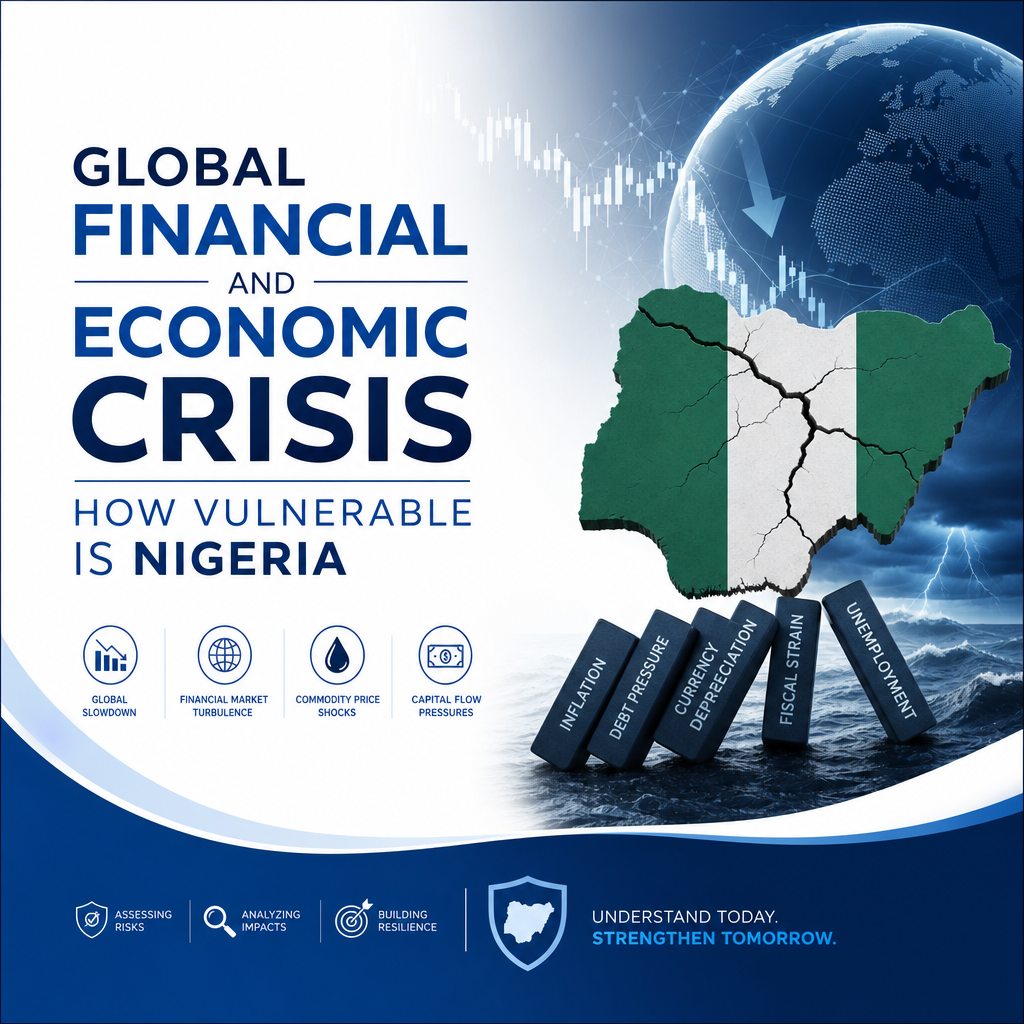
Global Financial and Economic Crisis, How Vulnerable is Nigeria
 Finance & Economy
Overview
The document is a speech or report titled 'Global Financial and Economic Crisis: How Vulnerable is Nigeria?' by Prof. Chukwuma C. Soludo, Governor of the Central Bank of Nigeria, dated January 2009. It analyzes the global financial and economic crisis that began in the US in 2007, its causes, global and national impacts, and specifically assesses Nigeria's vulnerability and responses. Key points include: the crisis started as a financial crisis (sub-prime mortgage) and evolved into a global economic crisis; causes include financial innovations (leveraging, swaps, sub-prime lending), loose regulatory regimes, easy monetary policy post-9/11, and false assumptions about housing prices; impacts include declining output growth, weakened financial systems, job losses, stock market crashes, liquidity and credit crunch, and reduced consumer demand. Nigeria's vulnerability is examined through channels like stock market decline (Nigerian Stock Exchange fell significantly), reduced capital inflows, lower oil prices (Nigeria's major export), and tightening credit. Nigeria's response includes exchange rate adjustment as a key shock absorber, monetary policy measures (e.g., reducing interest rates, injecting liquidity), and fiscal stimulus. The document ends with threats, opportunities, and the road ahead, emphasizing the need for diversification and structural reforms.