
National Action Plan for Antimicrobial Resistance (2017-2022)
 Health
Overview
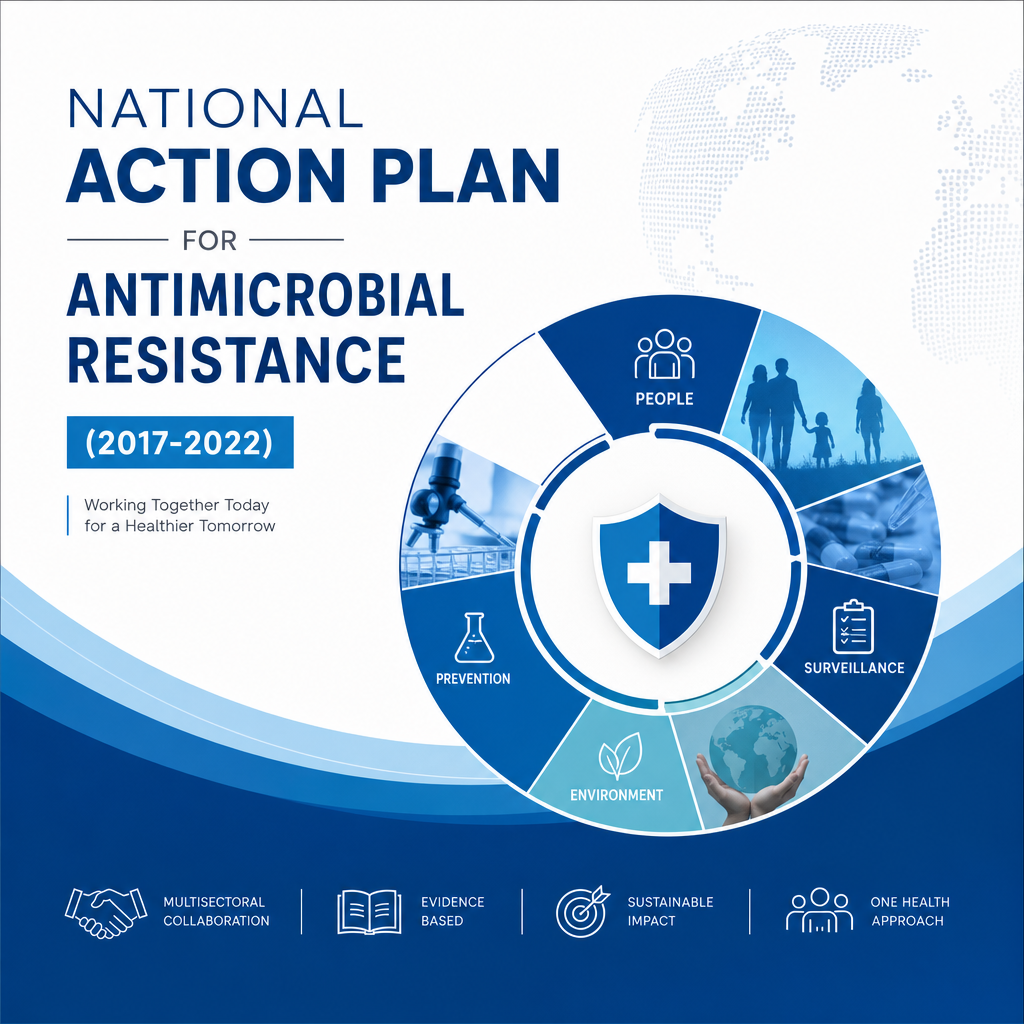
The National Action Plan for Antimicrobial Resistance (2017-2022) for Nigeria outlines a comprehensive strategy to combat antimicrobial resistance (AMR) through a 'One Health' approach. The document begins with a country profile and health system overview, highlighting Nigeria's burden of infectious diseases and challenges in healthcare delivery. The AMR situation analysis reveals high rates of resistance in pathogens such as Escherichia coli, Staphylococcus aureus, and Klebsiella pneumoniae, with limited surveillance and data. Key achievements include the establishment of an AMR Technical Working Group (AMR-TWG) and governance structure, while challenges include weak laboratory capacity, inadequate infection control, and irrational antimicrobial use. The strategic plan is organized into five focus areas: (1) increasing awareness and knowledge through advocacy, communication, and social mobilization; (2) building a 'One Health' AMR surveillance system integrating human, animal, and environmental sectors; (3) intensifying infection prevention and control (IPC) in healthcare and community settings; (4) promoting rational access to antibiotics and antimicrobial stewardship (AMS); and (5) investing in AMR research and development. The operational plan details activities, timelines, responsible institutions, and budgets for each focus area. The monitoring and evaluation framework includes indicators, data sources, and a proposed information flow structure. The document emphasizes multi-sectoral collaboration among ministries of health, agriculture, and environment, with support from international partners like WHO, FAO, and OIE. Key entities include the Federal Ministry of Health, Nigeria Centre for Disease Control (NCDC), National Agency for Food and Drug Administration and Control (NAFDAC), and veterinary councils. The plan aims to reduce AMR prevalence, improve surveillance, and promote rational antimicrobial use by 2022.