
National Disaster Risk Management Policy
 Health
Overview
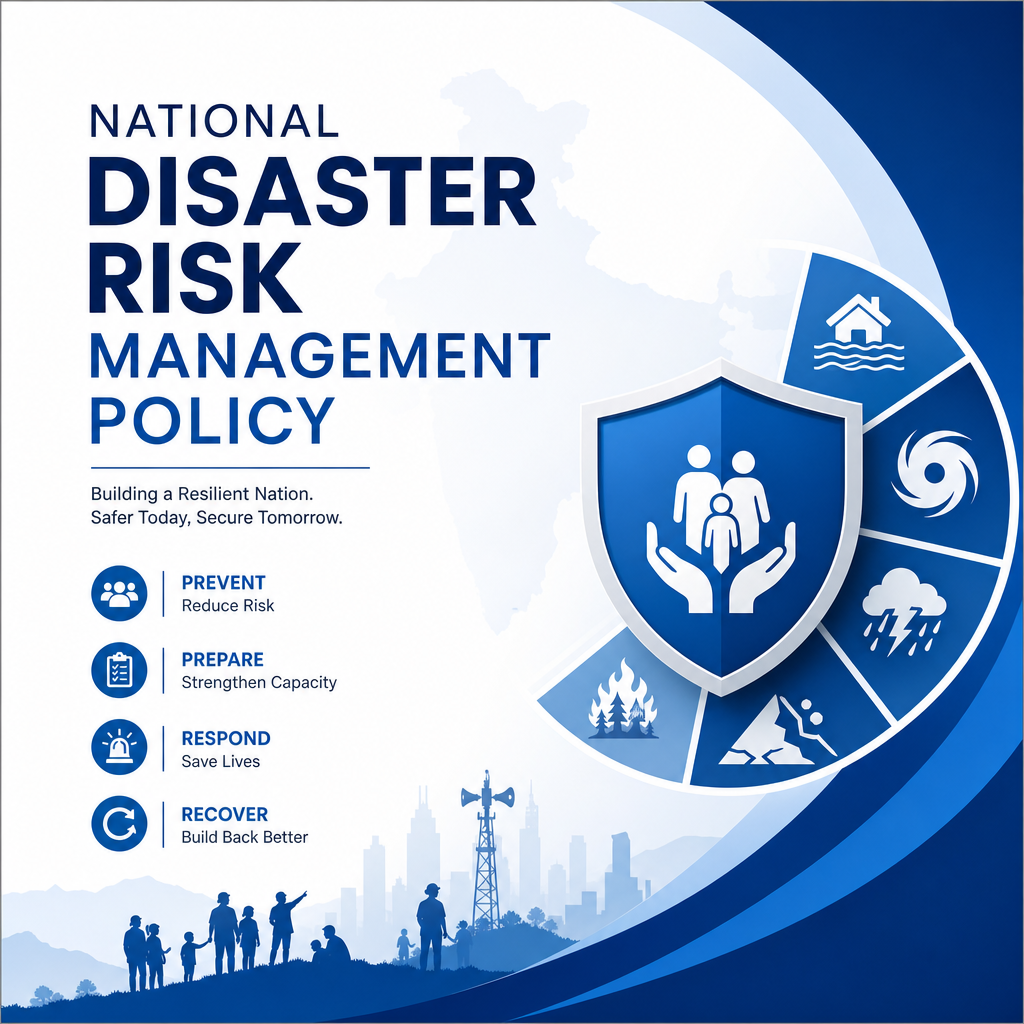
The National Disaster Risk Management Policy 2018 for Nigeria, issued by the National Emergency Management Agency (NEMA), provides a comprehensive framework for addressing disaster risks in the country. It outlines the national context, gaps, and emerging issues such as recurring floods, insurgency, building collapses, erosion, ocean surges, and earth tremors, which exacerbate vulnerabilities due to climate change. The policy's vision is to build a disaster-resilient Nigeria through effective risk management. Its mission is to coordinate and implement proactive strategies to reduce disaster risks and enhance preparedness, response, and recovery. The goal is to integrate disaster risk management into national development planning, and objectives include strengthening risk awareness, governance systems, preparedness, and investments in resilience. The policy adopts a multi-stakeholder, risk-informed approach covering prevention, mitigation, preparedness, response, and recovery. Key principles include inclusivity, sustainability, and evidence-based decision-making. The policy prioritizes four areas: expanding awareness and understanding of disaster risk (risk identification, information dissemination, early warning, and public education); strengthening multi-stakeholder governance (legal/institutional frameworks, planning, coordination, capacity development, participation, and financing); enhancing preparedness to reduce exposure and vulnerability (preparedness framework, response, recovery, and reconstruction); and increasing social, economic, and environmental investments to strengthen resilience (risk reduction in key sectors, climate risk management, slow-onset disasters, urban risk reduction, and conflict management). The policy is subject to review and includes annexes for additional guidance.