
National Policy on Ageing
 Health
Overview
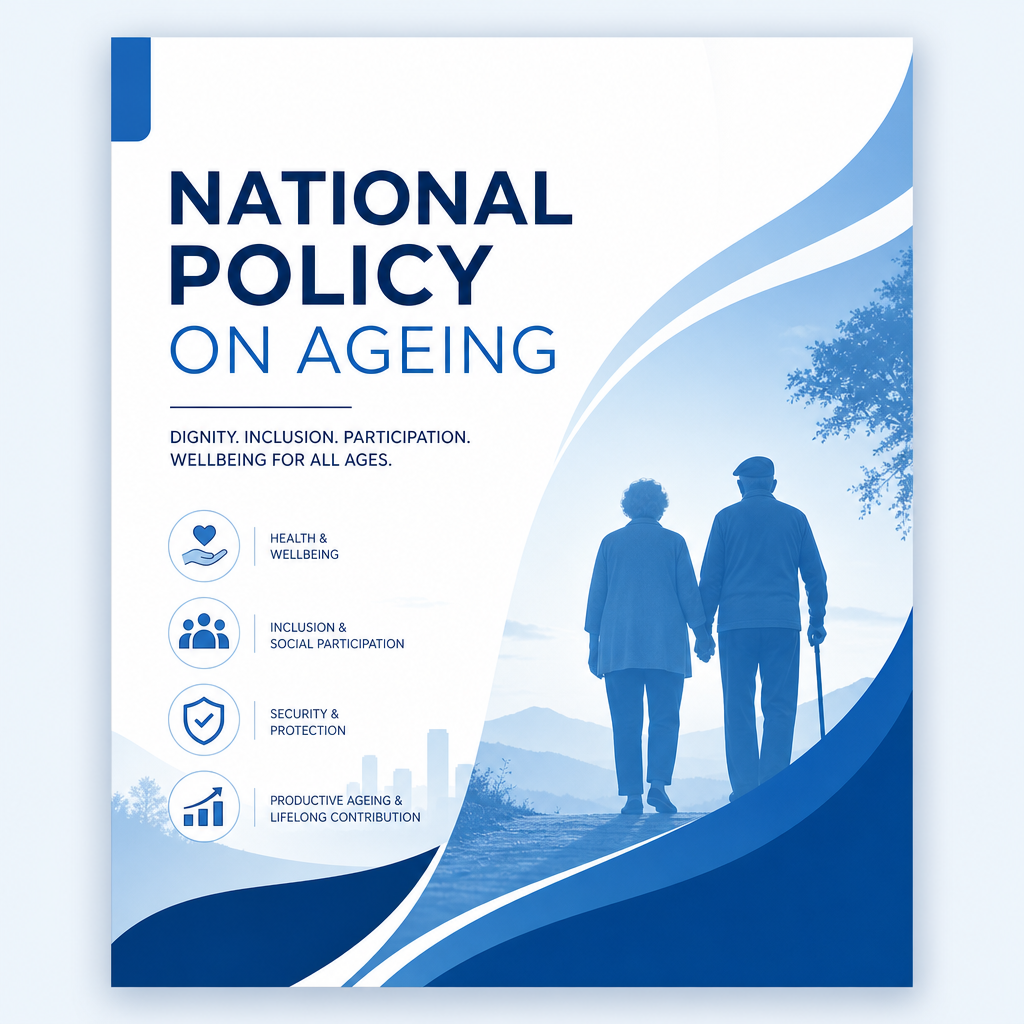
The National Policy on Ageing is a comprehensive document by the Federal Republic of Nigeria, developed by the Federal Ministry of Humanitarian Affairs, Disaster Management and Social Development in 2020. It addresses the multi-dimensional issues affecting older persons (aged 60 and above) in Nigeria. The policy is grounded in global frameworks, including the 1982 World Assembly on Ageing, the 1991 UN Principles for Older Persons, the 2002 Second World Assembly on Ageing, and the African Union Policy Framework. A situation analysis revealed challenges such as social isolation, health issues, economic constraints, and erosion of extended family support. The policy's vision is to create a society where older persons live in dignity and security, with full participation in community life. Its mission is to ensure a supportive environment through legal, social, and economic frameworks. Goals include promoting active ageing, reducing poverty among older persons, ensuring access to healthcare, and strengthening social protection. Key objectives are to: (1) raise awareness about ageing issues, (2) reduce poverty, (3) improve health and nutrition, (4) provide adequate housing, (5) strengthen family support, (6) establish social protection systems, (7) promote employment and income security, (8) protect during crises, (9) address ageing and migration, (10) promote lifelong learning, (11) integrate gender perspectives, (12) foster social integration, (13) cater to older persons with disabilities, and (14) ensure access to justice. The policy identifies stakeholders including federal and state governments, local governments, civil society, private sector, international partners, and older persons themselves. It proposes an institutional framework with a National Council on Ageing, a National Commission for Older Persons, and state committees. It emphasizes research, monitoring and evaluation, coordination, partnerships, and resource mobilization. The policy is structured into ten chapters covering background, situation analysis, policy framework, priority themes (15 areas), institutional framework, research, monitoring, coordination, review, and conclusion.