
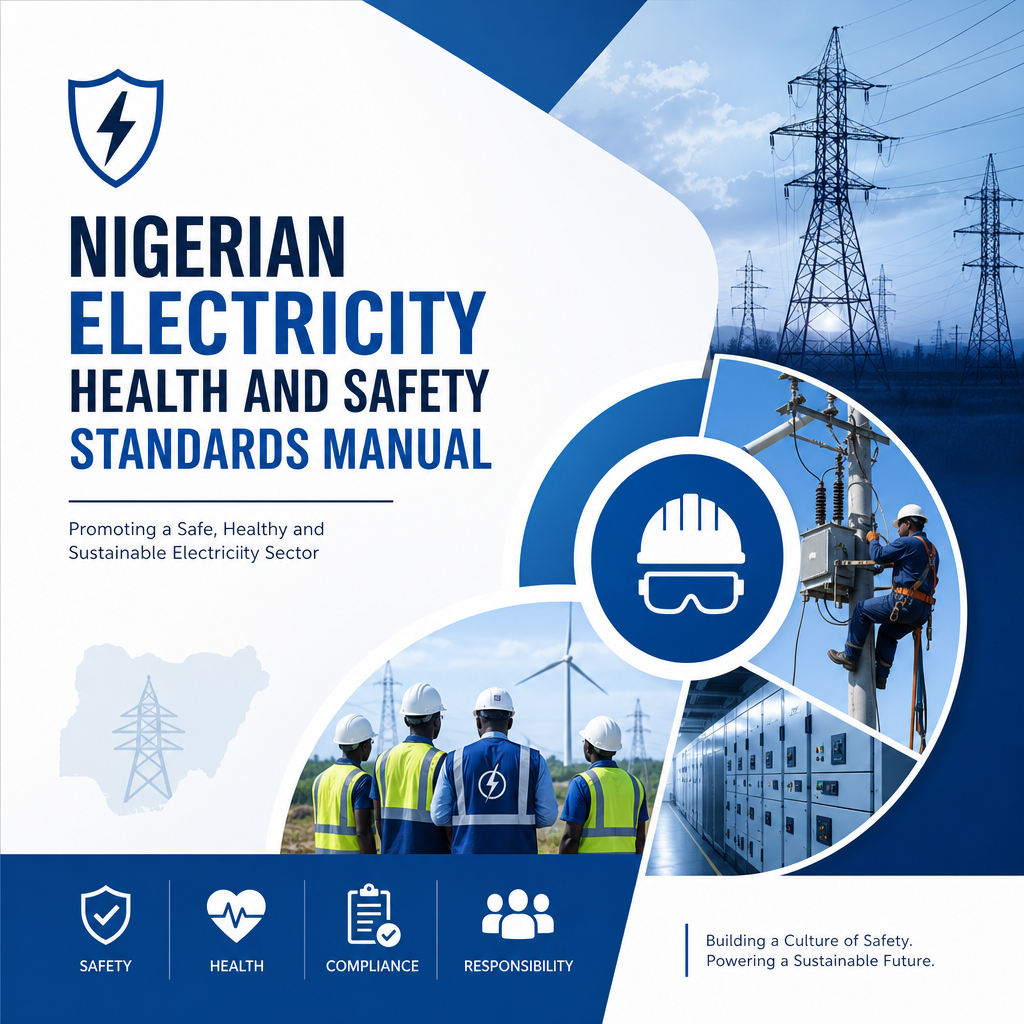
Nigerian Electricity Health and Safety Standards Manual
 Power
Power
Overview
The Nigerian Electricity Health and Safety Standards Manual, published in March 2008 by the Nigerian Electricity Regulatory Commission (NERC), establishes comprehensive health and safety standards for the electricity sector in Nigeria. Developed under a Technical Assistance project funded by the United States Trade and Development Agency (USTDA) and implemented by Princeton Energy Resources International (PERI), the manual represents the first major update of industry-specific safety rules since the 1980s. It incorporates International Industry Best Practice (IIBP) and addresses common safety issues specific to the power sector. The manual details the precarious state of Nigeria's power infrastructure at the time, noting a total installed generating capacity of 7,994 MW from 15 stations (4 hydro, 11 thermal), with a maximum recorded load of 3,774.4 MW in August 2005. Many generating units were broken down due to lack of maintenance, transmission lines were radial and overloaded, switchgears obsolete, and distribution transformers overloaded, leading to transmission and distribution losses of 30–40% and frequent system collapses. With a population over 150 million, generation capacity was inadequate, and an additional 10,000 MW from Independent Power Producers (IPPs) was projected as the sector liberalized. The manual also notes that limited accident statistics gathered by NERC showed monthly fatalities from electrocution, attributed to the lack of adequate safety standards. The document is intended as a living document to evolve with technological changes.