
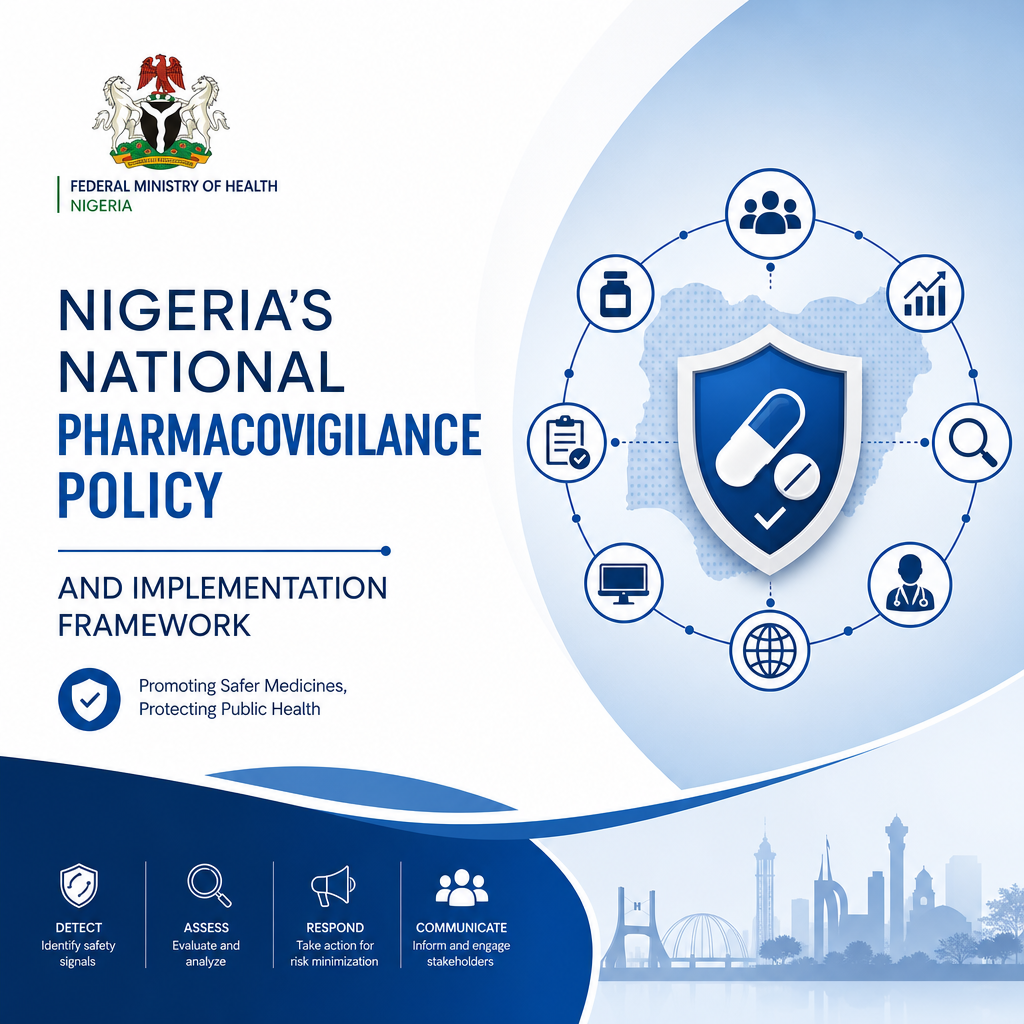
Nigeria's National Pharmacovigilance Policy and Implementation Framework
 Health
Overview
The document is the first revision (June 2020) of Nigeria's National Pharmacovigilance Policy and Implementation Framework, published by the Federal Ministry of Health. It updates the original 2012 policy to strengthen drug safety monitoring across the country. The policy clarifies roles and responsibilities of stakeholders in public and private health sectors and at various government levels, with emphasis on monitoring adverse drug reactions (ADRs) for both conventional and herbal medicines. It includes an implementation framework with clear milestones and targets, integrating pharmacovigilance into public health programs and requiring annual safety reports from donors. The foreword by Honourable Minister of Health Dr. Osagie Ehanire highlights the need to address gaps in the past eight years. The preface traces pharmacovigilance back to WHO's 1968 International Drug Monitoring Programme and notes NAFDAC's coordination role under the Federal Ministry of Health. The situational analysis covers ADR reporting rates across geopolitical zones, training for healthcare providers and marketing authorization holders, and use of e-reporting tools alongside traditional yellow forms. Section 9 outlines the regulatory framework, emphasizing ADR reporting as an ethical and professional duty for health professionals and traditional medicine practitioners. The policy is intended to ensure safe use of medicines at all healthcare levels in Nigeria.